

opinion tech + games single source: Science News
Cosmic Dawn: When Did Life Get Its Ingredients?
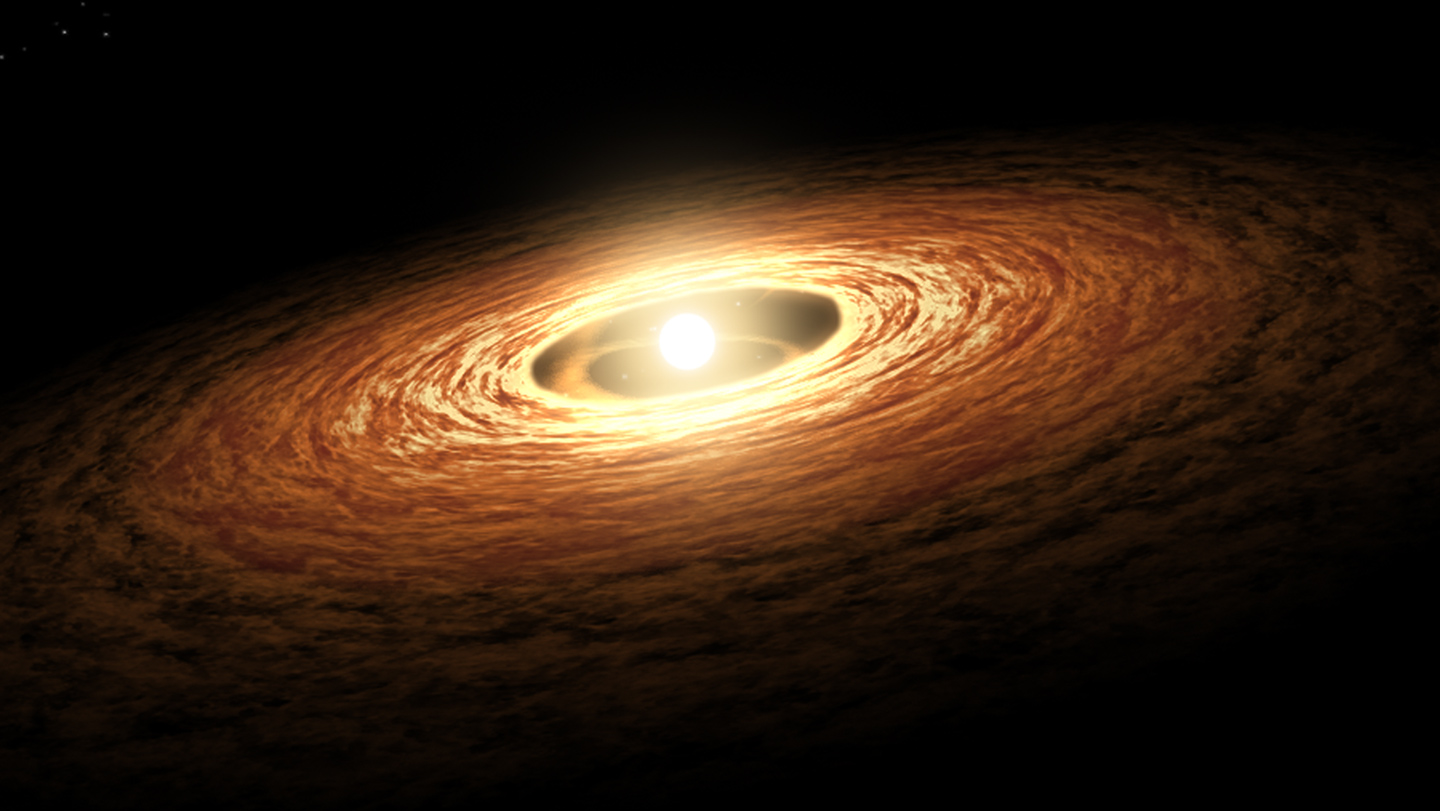
We usually imagine the solar system, or any habitable world, as a product of slow, patient accumulation. Planets grow over eons, gathering dust grains across unimaginable timescales within the embrace of a maturing galaxy. It feels like a gentle unfolding.
But recent computer simulations are forcing us to rip up that placid narrative. They suggest that the foundation for rocky worlds—the actual building blocks—might have been laid down shockingly fast: perhaps only 100 million years after the Big Bang.
This isn't just moving a dot on the cosmic clock; it fundamentally alters how we view the possibilities of existence.
The catalyst appears to be the spectacular violence of the universe's first massive stars. Their explosive deaths didn't just spread energy; they forged and ejected isolated clouds dense enough in iron and carbon to act as genuine planetary seeds. These pockets weren't waiting patiently for everything else to settle down; they were actively assembling matter almost immediately following creation.
Furthermore, these simulations factored in water availability within those nascent stellar systems—another critical ingredient arriving shortly after the initial rock-building phase.
Daniel Whalen points out that this means "habitable worlds, in principle, could have formed billions of years earlier than previously thought, even before the first galaxies formed." That statement hangs heavy: the preconditions for life might predate galactic structure itself.
What’s fascinating is tracing this debris trail back through events like pair instability supernovae—events powerful enough to pump out colossal amounts of heavy elements into the surrounding gas cloud. This mixture collapsed into small stars encircled by dusty disks where planetesimals—those embryonic rocks ranging from meters to kilometers—began to coalesce.
Some of these early clumps reportedly formed at distances conducive to sustaining liquid water.
Jarrett Johnson echoes this sense of profound revisionism, stating that while finding life isn't guaranteed ("Just because there are planets forming doesn’t mean there’s life"), the evidence shows "the ingredients are being put in place pretty much as early as they possibly could be."
If these ancient worlds survived their tumultuous beginnings, they remain hidden relics. The simulated star was relatively low mass compared to our own Sun, giving it an exceptionally long lifespan. If one such system drifted into our neighborhood, its unique chemical fingerprint could serve as an undeniable marker pointing back to that universe infancy.
Finding one is deemed possible, opening up a vast new avenue for inquiry into what transpired during those first thirteen billion years plus since those initial stones gathered momentum. It demands we rethink what ‘early’ really meant in the context of cosmic opportunity.
← all posts
Comments
Loading comments…