

opinion tech single source: Rock Paper Shotgun
The Architecture of Imitation: When Code Theft Meets the AI Echo Chamber
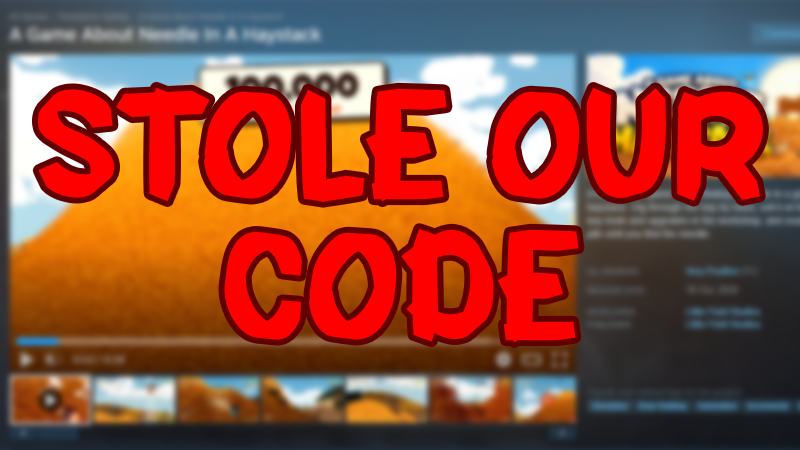
NoGlyph developers assert that their game code was structurally copied by Little Field Studios.
There’s a feeling in the digital air right now—a low, persistent hum of imitation. A seemingly simple, almost absurd concept—finding a needle in a pile of horse food—has somehow become a lightning rod for the modern creative economy. What started as a whimsical premise, born from a viral meme, has ballooned into an endless, chaotic pile of games.
But this isn't just about people riding a trend; it’s about something far more brittle underneath.
We are watching the process of replication accelerate past inspiration and straight into infringement. NoGlyph, the creators behind Needle In A Haystack, have leveled a serious accusation against Little Field Studios, makers of A Game About Needle In A Haystack. The timeline is tight: NoGlyph’s version landed on September 29th; Little Field Studios’ followed on October 16th.
Both games share that core loop—digging through piles of feed to find metal implements—and both seem to be capitalizing on notoriety sparked by an unreleased simulator that blew up via social media back in August.
But this isn't merely shared DNA; this is alleged theft at the structural level.
When NoGlyph dug into the files of the copycat, they didn't just find similarities; they found architectural echoes. Thirteen classes were identified with identical names. More than half the functions within that specific code section matched theirs exactly.
Even word-for-word error messages surfaced, pointing toward shaders from NoGlyph’s project that simply don't exist in the rival game. Crucially, this copied code mirrors the version of NoGlyph’s free demo released just weeks prior to its competitor hitting Steam. It’s not just aesthetic mimicry; it’s appropriation of the "hay code"—the precise engineering behind how the digging functions and how different resources operate within their system.
This incident serves as more than just an isolated squabble between two small studios fighting over lines of syntax. It is a flashing warning light for every proprietary digital craft being built today because we are living in an era where generative AI is becoming frighteningly adept at pattern matching and decompilation shortcuts.
The anxiety surrounding this issue feels less like paranoia and more like predictive reality checking across industries right now. Just last week, makers of Drunken Goddess Reflux pulled back their public demo plans entirely, choosing limited playtesting instead because they feared their presentation could be instantly weaponized by AI tools to imitate or replicate their gameplay before launch even occurs publicly.
The needle in this haystack has become a battleground over ownership itself—a fight not just against competition, but against algorithmic absorption before creation can even solidify into marketable property rights again. The question shifts from whether imitation will happen to how much foundational structure—the hard-won logic baked into functioning code—can be stripped away and reassembled by automated processes before its origin point is irrevocably blurred out by mimicry engines running hot across servers globally?
This isn't about plagiarism anymore; it's about defending proprietary craft against automated erosion in an age saturated by synthetic possibility.
← all posts
Comments
Loading comments…